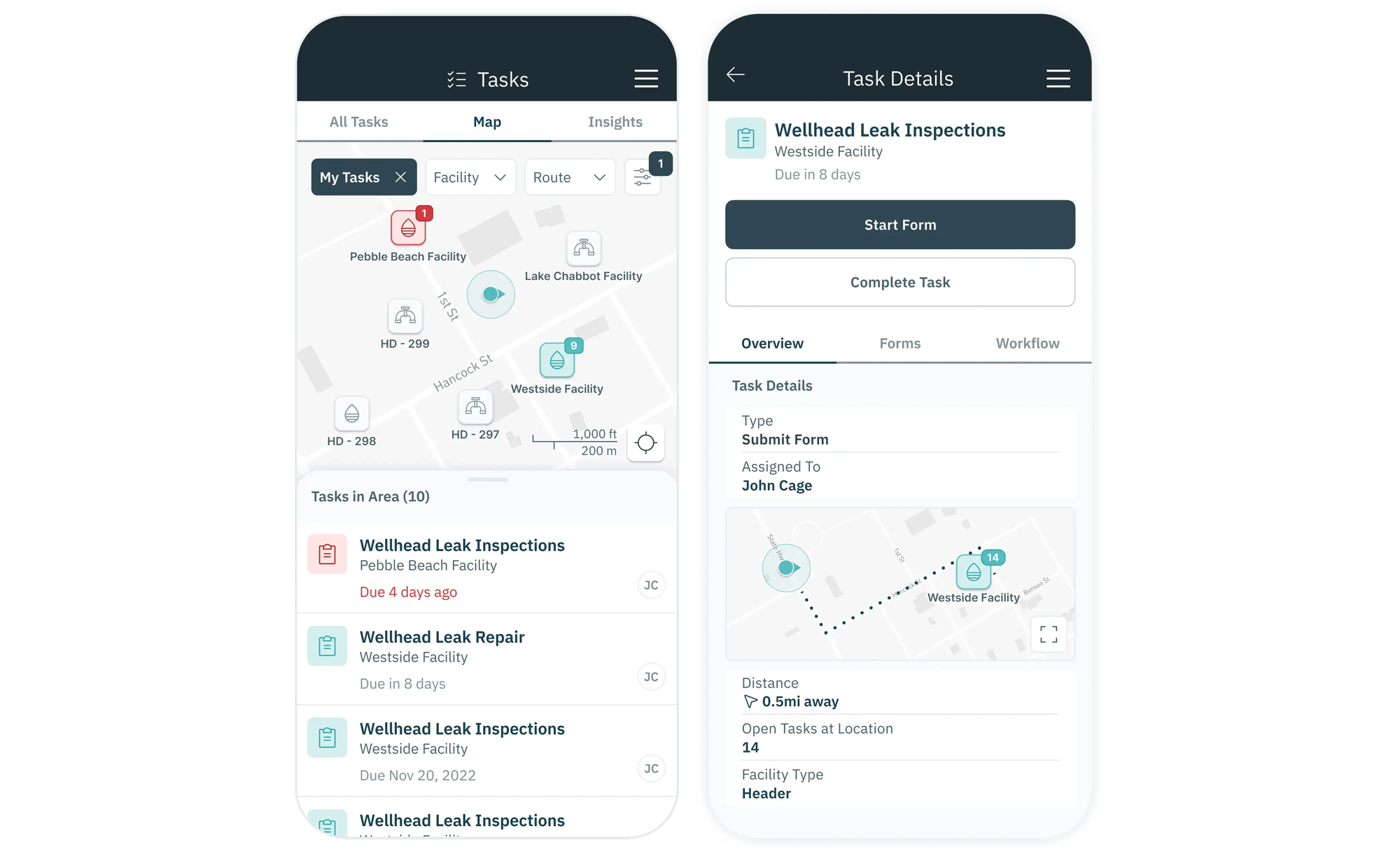
Streamline your environmental, health, and safety programs
Efficiently manage your growing environmental, health, and safety compliance requirements using a powerful, integrated platform.
Book a demo
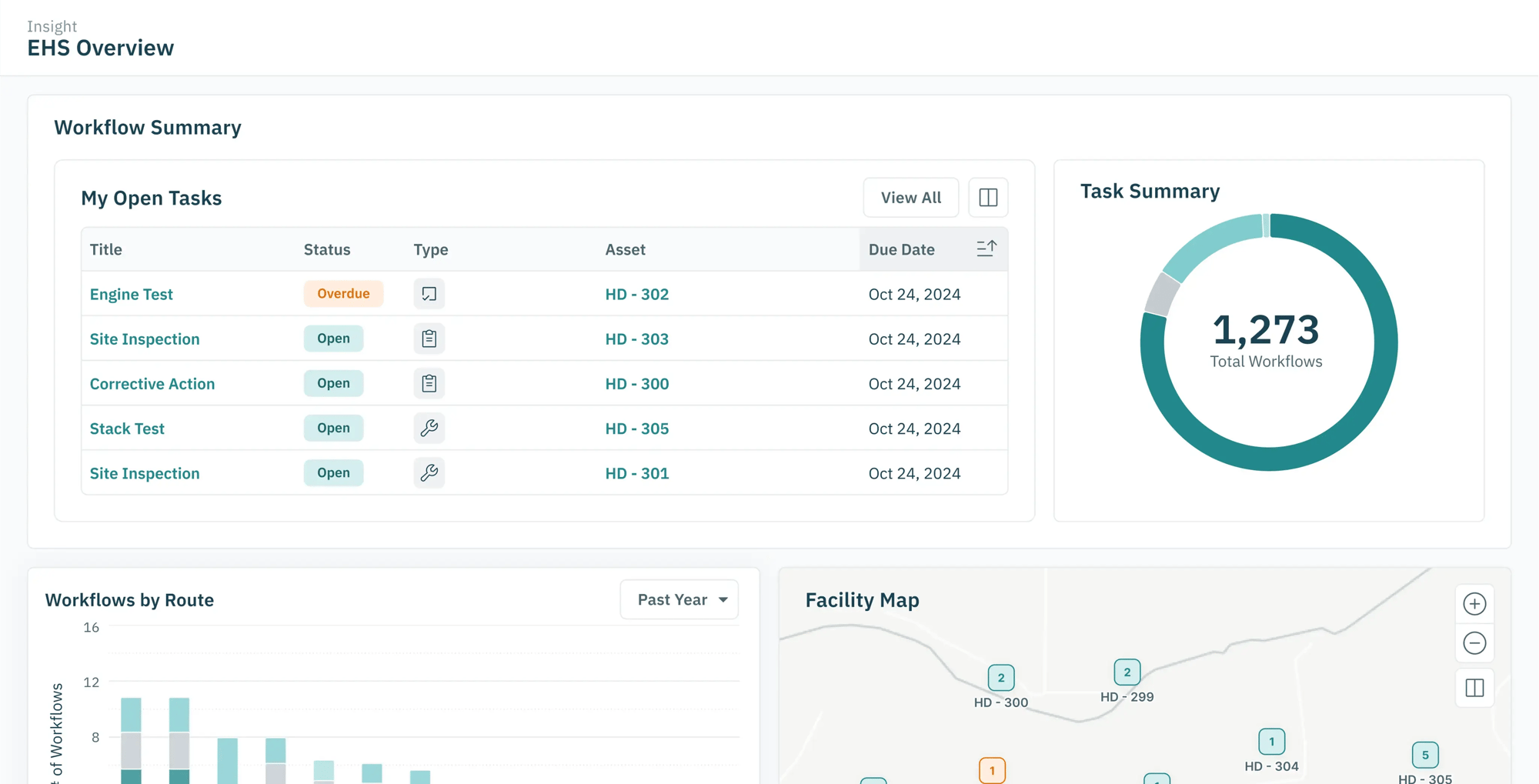

Achieve environmental compliance with speed and efficiency
Comprehensive LDAR management
Efficiently manage scheduling and tracking surveys in compliance with federal and state/provincial level requirements.
Learn MoreStreamlined inspections, even offline
Systematize field inspections such as leak surveys and corrective actions. Capture data efficiently, even when in remote locations.
Learn More
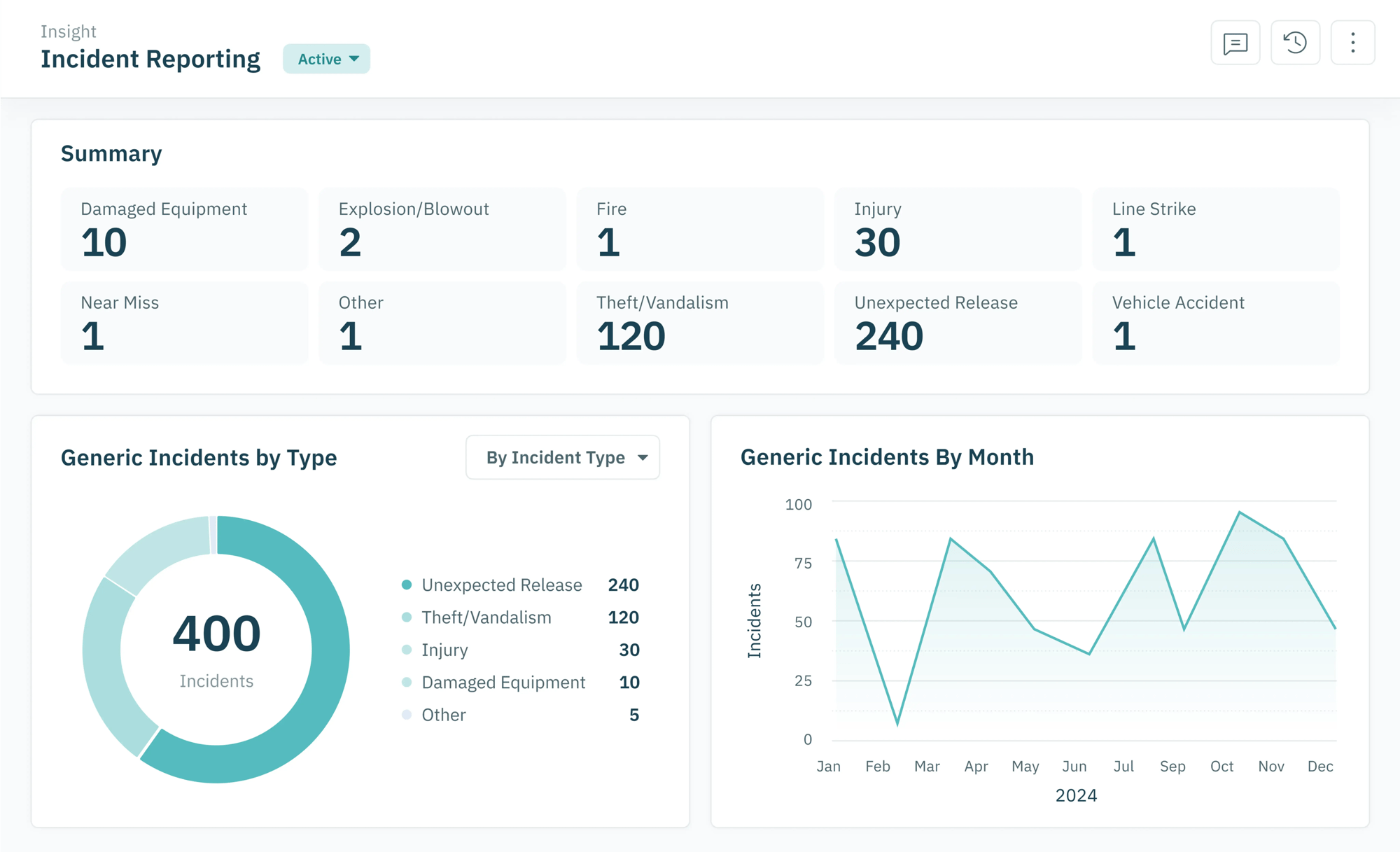
Prioritize field team safety with an effective H&S program
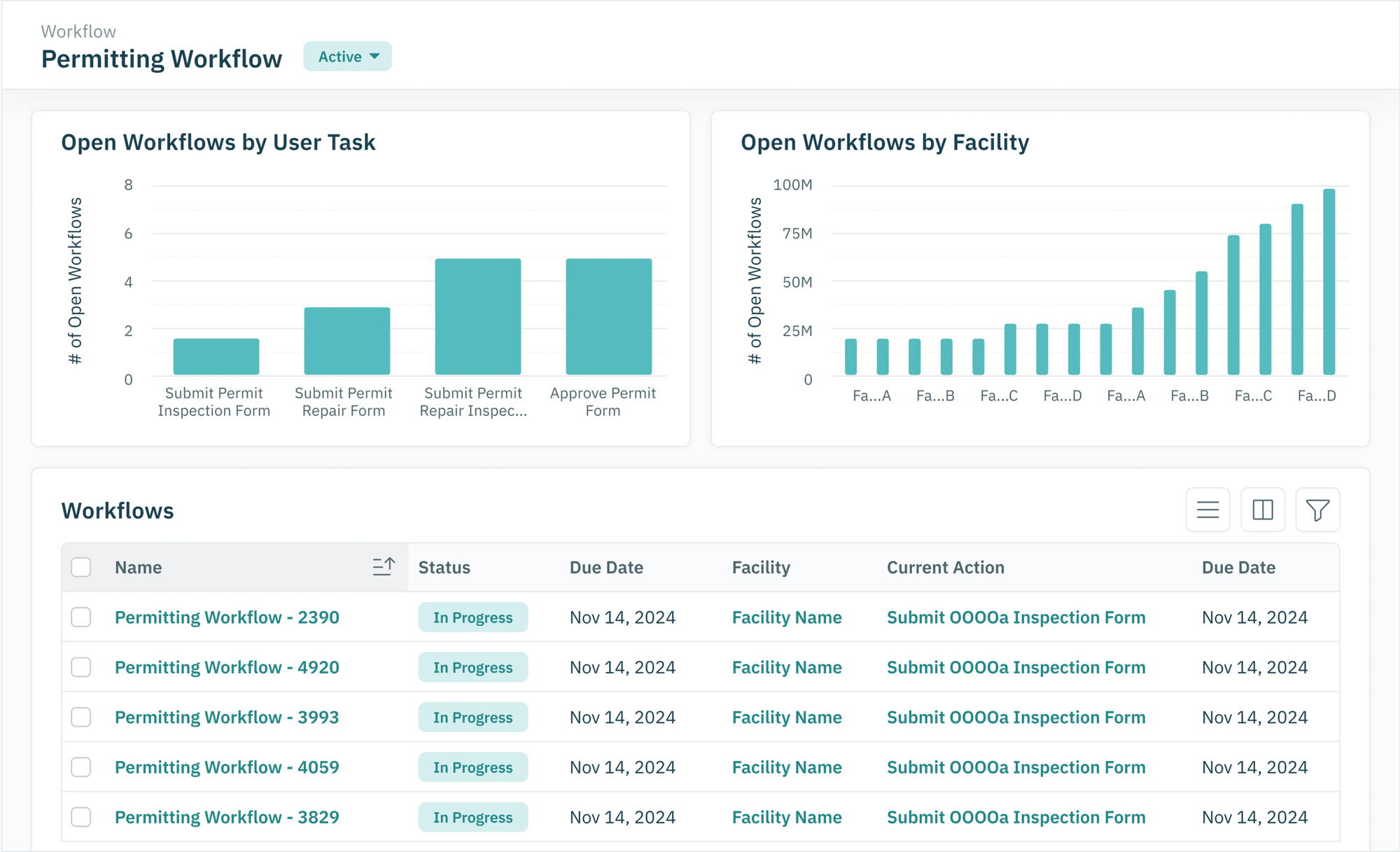
Reduce time and effort with automated air, water, and waste permitting
Configurable permit templates
Define templates and pre-fill from underlying asset inventories. Automatically format files, reducing time and effort.
Learn MorePermit tracking and visibility
Proactively manage permits with complete visibility into status and deadlines. Monitor pollutants to ensure limits are not exceeded.
Learn More
Trusted by industry leaders & innovators

Frequently Asked Questions
Find answers to common questions about this solution, implementation considerations, integrations, and reporting capabilities.
What is EHS management software?
EHS management software helps organizations run environmental, health, and safety programs through shared workflows, standardized processes, and digital recordkeeping. For energy and industrial operators, that usually means connecting inspections, incidents, corrective actions, permits, training, and environmental reporting so the record stays intact from field work through submission.
Read the EHS management software guide for energy companies →
What should oil and gas companies look for in EHS software?
Look for platforms that handle distributed assets, cross-functional handoffs, and environmental depth, not only workplace safety modules. Strong fits preserve operational context behind reported values, support multi-site governance without forcing every facility into identical forms, and keep inspections, corrective actions, and reporting on the same governed trail.
See top EHS software considerations for energy and oil and gas →
How is EHS software different from environmental compliance software?
EHS software typically covers a broader set of health, safety, and environmental workflows. Environmental compliance software focuses more narrowly on environmental obligations, inspections, permits, evidence, and environmental reporting. Many operators need both ideas in one program. The buying question is whether environmental and emissions-adjacent depth is strong enough for your reporting and obligation work, not only whether the product is labeled EHS.
Explore Validere environmental compliance →
What makes multi-site EHS programs hard to run?
Multi-site programs break when ownership, methods, and evidence differ by facility while corporate reporting still needs one defensible story. Acquisitions, local workbooks, and disconnected systems create duplicate entry, late reconciliation, and weak links from a reported value back to source activity. Standardization matters. Uniformity does not.
Read how to manage EHS software across multi-site operations →
What questions should buyers ask before choosing EHS management software?
Ask how the platform handles incomplete data, method changes, open exceptions, multi-site permissions, and whether a reviewer can reconstruct a reported value months later without leaving the system. Demo those exception paths with your asset structure. Do not score only the dashboard or a polished report export.
Review 8 questions to ask about EHS management software →
How should energy companies implement EHS management software?
Implementation succeeds when ownership, workflows, and data sources are defined before configuration. Start with the processes that create reporting and audit risk, pilot with real facility data, and include plant environmental leads early. Replacing spreadsheets without fixing handoffs rarely changes the outcome.
See how to implement EHS software across oil and gas operations →
Where do EHS and environmental compliance workflows usually break?
Problems often surface at filing week or during an audit, but they usually start earlier: unclear ownership of the next step, late or inconsistent source data, re-entry across systems, field activity that never reconnects to the compliance record, and approvals or evidence that live in email and shared drives.
Review 9 workflow bottlenecks that create industrial compliance risk →
Can EHS software support LDAR and emissions-related programs?
It can when leak detection, inspections, repairs, and documentation reconnect to the broader EHS and emissions record rather than sitting in a side tool. Operators with air rules, methane programs, and facility reporting obligations should confirm that field workflows, deadlines, and evidence stay attached to the same governed process used for oversight and reporting.
Read the LDAR software buyer's guide →