Hero-03

All-in-one emissions management software

Manage air and GHG emissions with facility-level calculations, Scope inventories, regulatory and voluntary reporting, and scenario modeling on one governed platform.

Book a demo
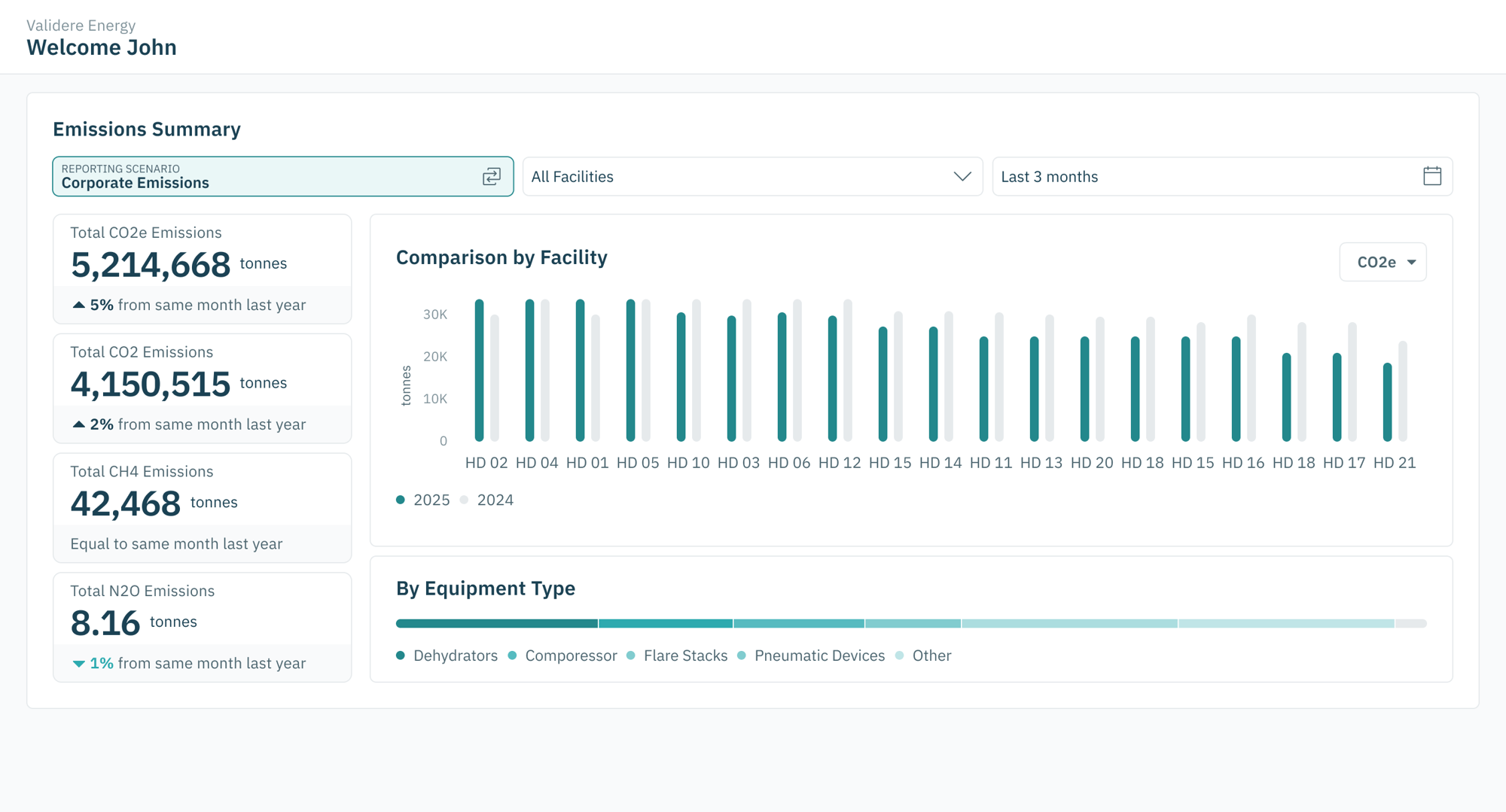

Emissions Home

Trusted by industry leaders & innovators

Conoco Phillips logo
Pembina logo
Total Energy logo
Petronas logo
Repsol logo
Woodside logo
Matador Resources logo
BKV logo
Crescent Energy logo
Bison Oil & Gas logo
Secure Energy logo
Gulfport Energy logo
KiwetinoHK Energy logo
Infinity Natural Resources logo
Koda logo
QB Energy logo

Frequently Asked Questions

Find answers to common questions about this solution, implementation considerations, integrations, and reporting capabilities.
What is emissions management software?

Emissions management software helps organizations collect, calculate, govern, and report emissions data across operations. Modern platforms support greenhouse gas inventories, regulatory reporting, voluntary disclosures, and operational emissions workflows while improving data quality and traceability.

Read the Emissions Management Software Buyer's Guide → 
What is air emissions management software?
Air emissions management software is emissions management software oriented to facility and source-level air pollutant and GHG work: calculations tied to equipment and activity data, permit and regulatory support, QA/QC, and evidence for audits. Teams often use it alongside corporate carbon accounting when they also need enterprise Scope totals.
Read the Emissions Management Software Buyer’s Guide
How is emissions management software different from carbon accounting software?
Emissions management software focuses on collecting, governing, and reporting operational emissions data. Carbon accounting software is often centered on enterprise greenhouse gas inventories and corporate carbon disclosures. Some platforms support both, but buyers should understand whether a solution is designed for operational compliance, corporate reporting, or both.
Can emissions management software support both regulatory and voluntary emissions reporting?

Yes! Many organizations use a single governed emissions data foundation to support both regulatory and voluntary reporting. While each framework has different methodologies and reporting requirements, a modern platform can help manage them from the same trusted operational data while maintaining transparency and traceability.

Explore regulatory and voluntary emissions reporting

What industries benefit from emissions management software?
Industries with complex operations and environmental reporting obligations—including oil and gas, utilities, petrochemicals, manufacturing, and other industrial sectors—benefit from centralized emissions data, standardized workflows, and improved reporting consistency.
How should organizations evaluate emissions management software?
Organizations should evaluate configurable workflows, transparent calculation methodologies, audit trails, integration capabilities, data governance, scalability, and support for both regulatory and voluntary reporting. The right platform should reduce manual effort while improving confidence in reported data.

See the emissions software evaluation framework →
Can emissions management software integrate with existing systems?
Most enterprise platforms are designed to integrate with operational, environmental, laboratory, ERP, historian, and business systems rather than replace them, helping reduce duplicate data entry and improve consistency.
How does emissions management software improve audit readiness?
Modern platforms strengthen audit readiness through documented calculations, data lineage, approval workflows, version history, and supporting evidence that allows organizations to demonstrate how reported emissions were produced.

Learn what to evaluate in environmental reporting software →
What should buyers look for in an emissions management platform?
Buyers should prioritize governed data, configurable workflows, transparent calculations, integration with operational systems, auditability, scalability, and the ability to support multiple reporting programs from a common data foundation.

Review the complete buyer's guide →