All-in-one emissions management software
Manage air and GHG emissions with facility-level calculations, Scope inventories, regulatory and voluntary reporting, and scenario modeling on one governed platform.
Book a demo

Quantify emissions for regulatory and voluntary reporting and compliance
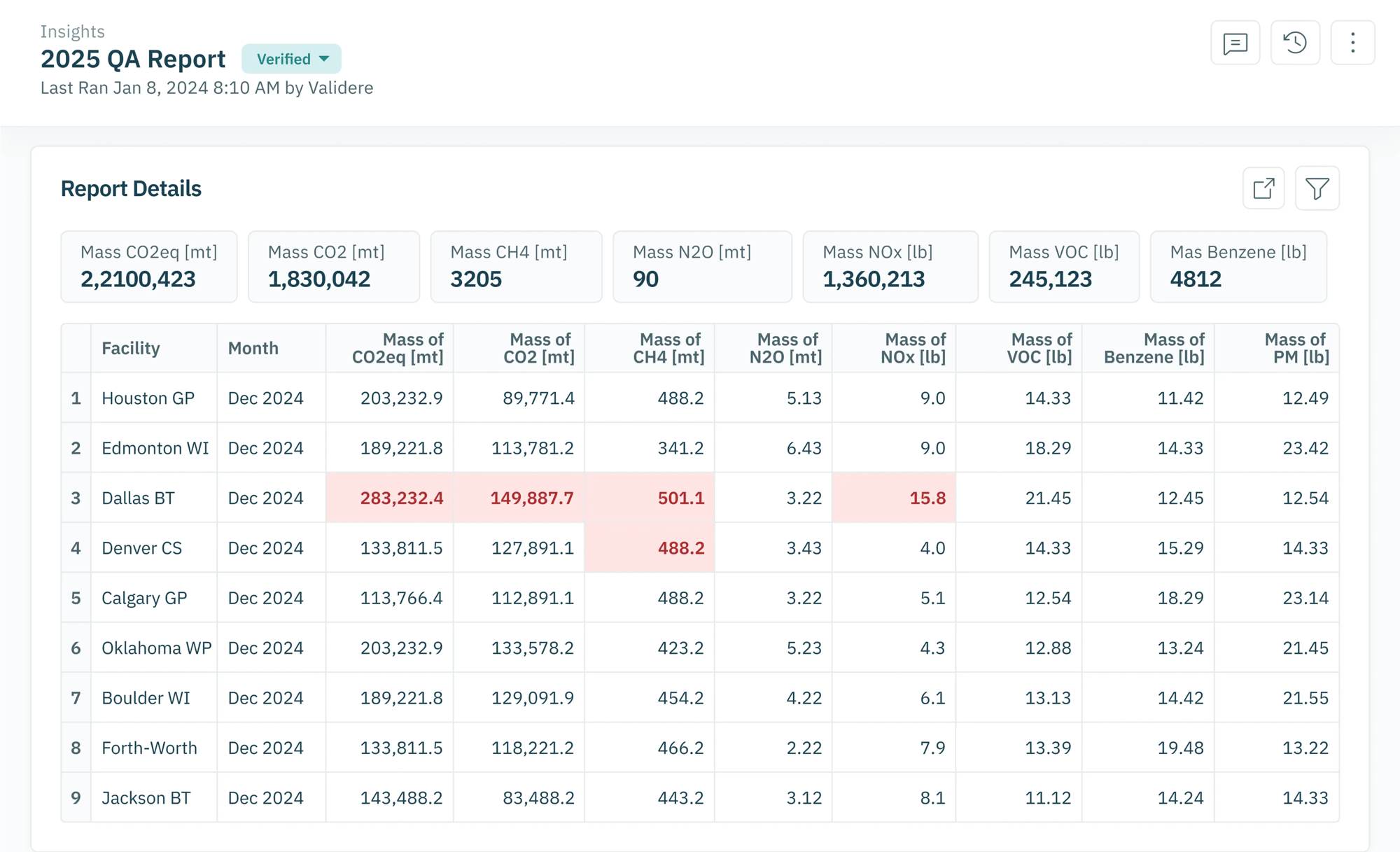
Regulatory air and GHG reporting
Connect activity data, emissions calculations, and review workflows to regulatory reporting requirements, with traceable results and supporting evidence.
Learn MoreVoluntary emission reporting
Easily meet the requirements of voluntary programs to demonstrate performance or differentiation.
Learn More
Integrate measurement into your emissions program
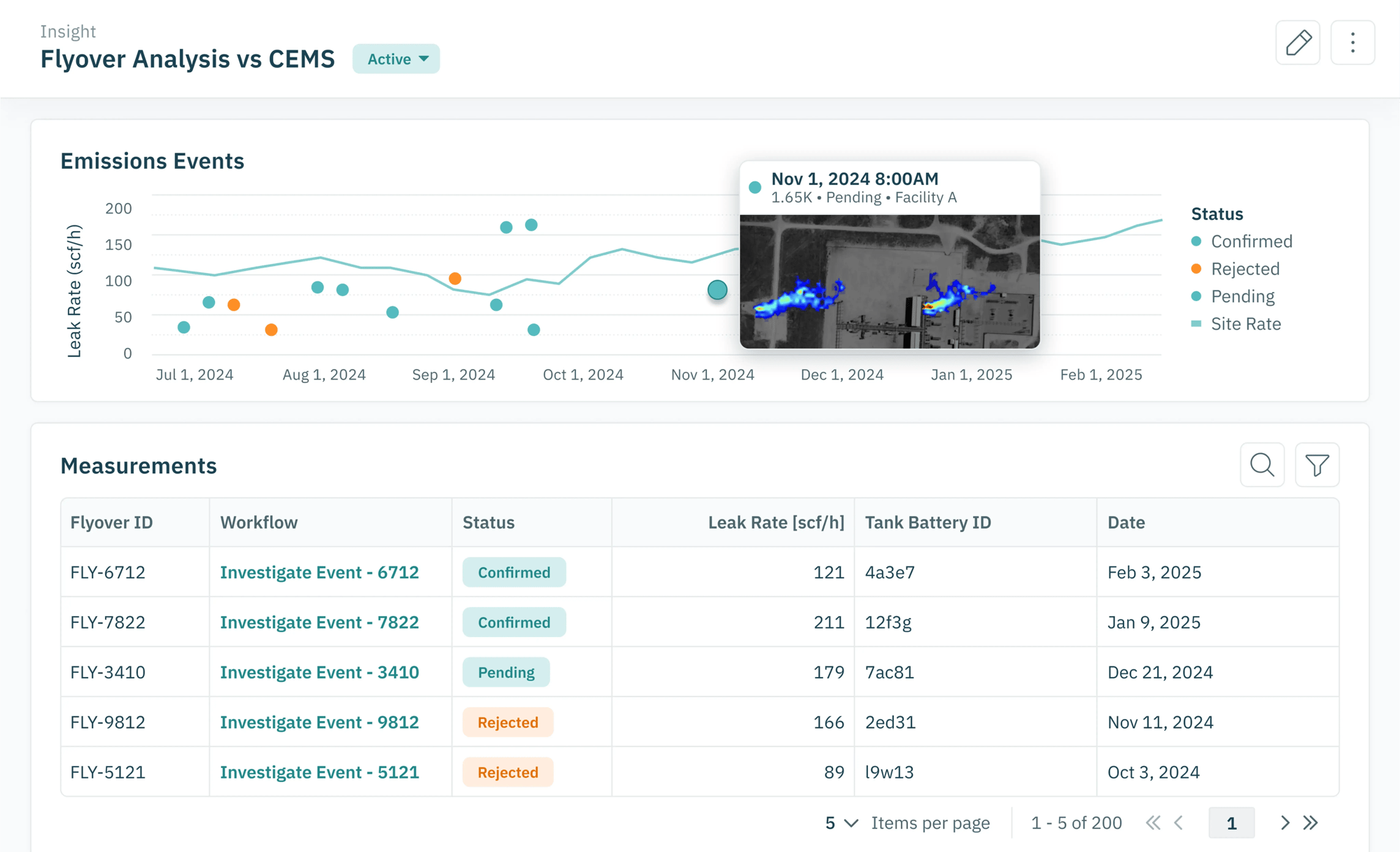
LDAR integration
Connect leak detection and measurement results to investigation and response workflows, with findings carried into the emissions inventory where applicable.
Learn MoreMeasurement informed emissions inventories
Combine measurements and calculated emissions where methodologies permit. Review discrepancies, document reconciliation decisions, and preserve supporting evidence with the inventory.
Learn More
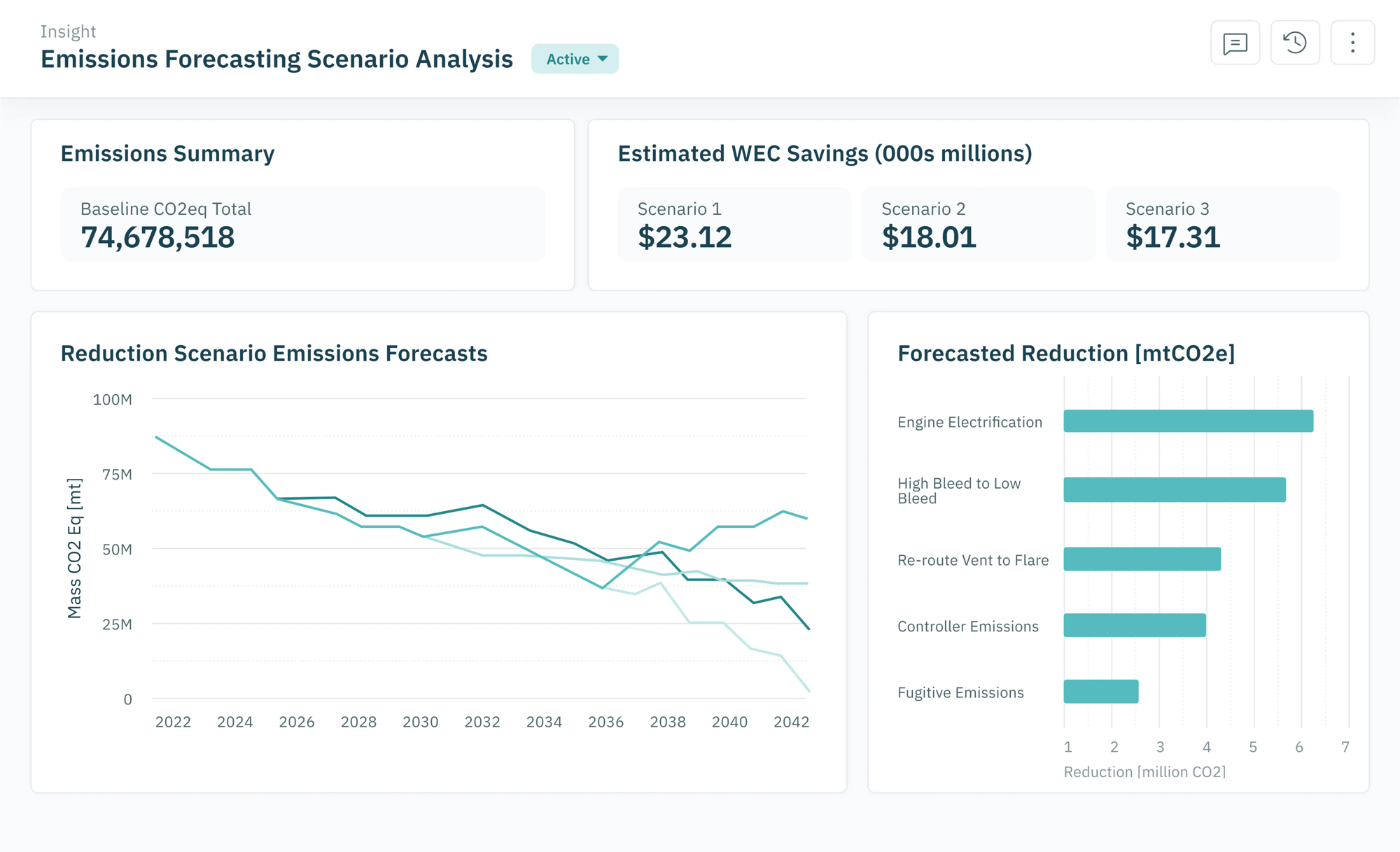
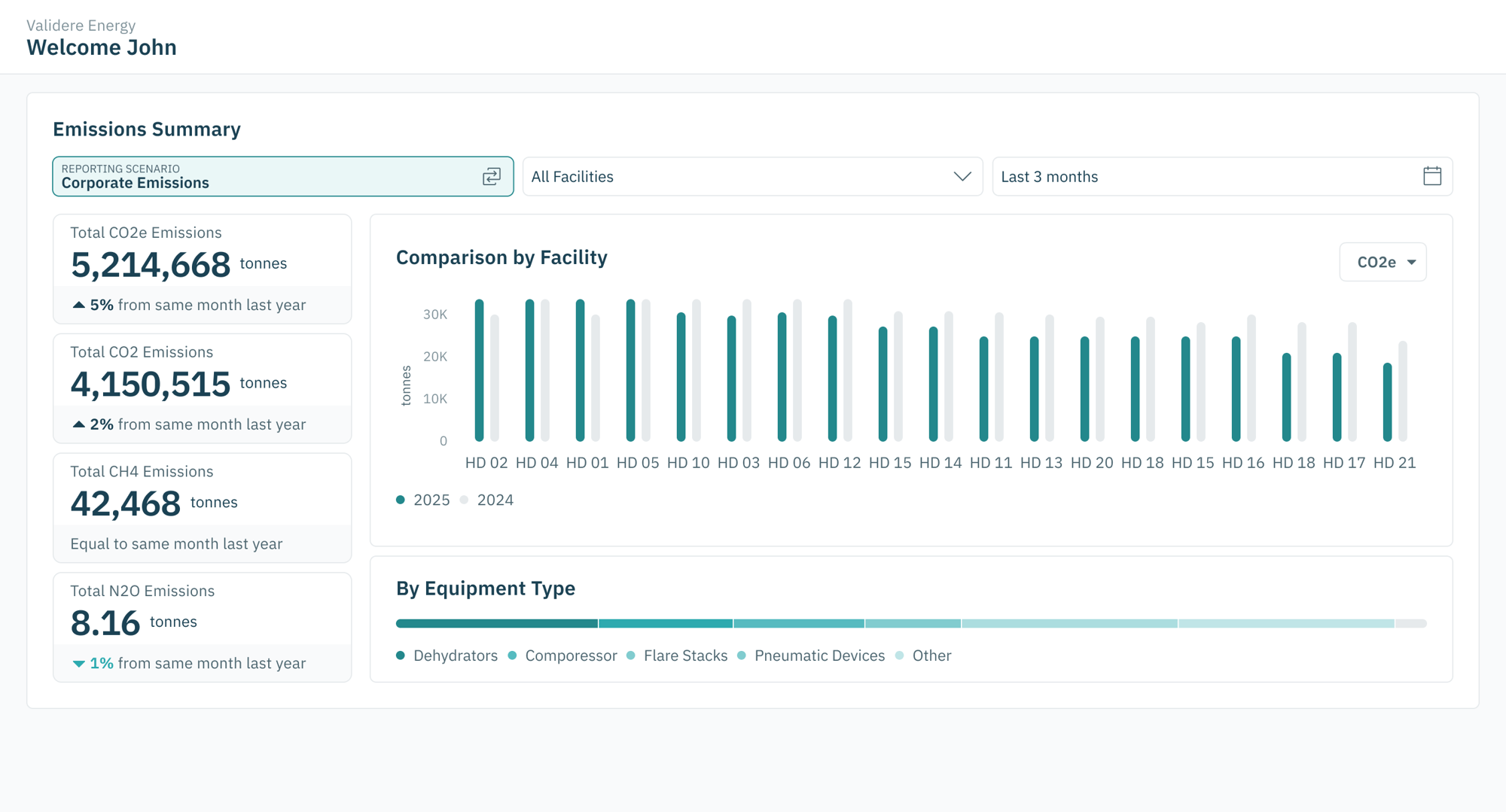
Steer your emissions strategy—forecast, validate, and model scenarios.
Emission assurance and verification
Keep calculation history, reviews, approvals, and supporting evidence connected to reported emissions so teams can prepare for assurance and verification without reconstructing the record.
Learn MoreCorporate emissions strategy
Model realistic operational scenarios and understand their impact on corporate emissions goals.
Learn More
Trusted by industry leaders & innovators

Frequently Asked Questions
What is emissions management software?
Emissions management software helps organizations calculate, track, and report air pollutants and greenhouse gas (GHG) emissions across their facilities and equipment. It brings together operational data, emissions calculations, and supporting records for regulatory and voluntary reporting. The software also supports data validation and calculation reviews, helping environmental teams understand how reported emissions were determined and which information was used.
Read the Emissions Management Software Buyer's Guide →What is air emissions management software?
Air emissions management software helps industrial organizations calculate, track, and report emissions released into the atmosphere, including regulated air pollutants and greenhouse gases. It supports facility- and equipment-level emissions calculations, monitoring data management, and reporting under applicable air-quality requirements. Environmental teams can use it to maintain the calculations and supporting documentation needed for regulatory submissions and compliance reviews.
Read the Emissions Management Software Buyer’s Guide →How is emissions management software different from carbon accounting software?
Emissions management software focuses on emissions from facilities, equipment, and industrial operations, including source-level calculations, data reviews, and regulatory reporting. Carbon accounting software typically focuses on organizational greenhouse gas inventories and corporate disclosures, including Scope 1, 2, and 3 emissions. The two can complement each other. For example, an oil and gas operator may calculate emissions at individual facilities and then consolidate those results into a corporate GHG inventory.
Learn more about carbon accounting and emissions management →Can emissions management software support both regulatory and voluntary emissions reporting?
Yes. Regulatory and voluntary reporting programs can use the same underlying facility data, even when their calculation methods, reporting boundaries, and requirements differ. For example, an oil and gas operator may use production and equipment data to support both an EPA greenhouse gas report and a voluntary methane inventory. Each reported result still needs to be supported by the inputs and calculation method used for that particular program.
Explore regulatory and voluntary emissions reporting →What industries benefit from emissions management software?
Emissions management software is especially useful in industries with complex facilities and reporting obligations, including oil and gas production, midstream operations, utilities, refining, petrochemicals, and other industrial sectors. In these industries, emissions calculations often depend on production data, equipment records, and measurements collected across different systems. Teams need to understand how reported totals were calculated, including what changes when a meter reading, calculation method, or measurement is updated.
How should organizations evaluate emissions management software?
Evaluate emissions management software against your organization's actual reporting requirements rather than relying on a feature checklist. Start with a representative facility, the operational data you collect, and a regulatory or voluntary report your team needs to prepare. During a demonstration, ask how the software handles source-level calculations, missing or incorrect inputs, calculation reviews, and changes to emissions records. This helps determine whether the software can support your existing reporting processes.
See the emissions software evaluation framework →Can emissions management software integrate with existing systems?
Yes. Emissions management software can connect with existing operational systems, including production management software, equipment databases, measurement systems, data historians, and leak detection and repair (LDAR) tools. These connections allow environmental teams to use relevant operating data for emissions calculations and reporting without repeatedly transferring information between systems. The available integrations and data-transfer methods depend on the systems involved.
Read how environmental software fits systems you already run →How does emissions management software improve audit readiness?
Emissions management software supports audit readiness by keeping the information behind reported emissions accessible for review. When an auditor or verifier questions a result, environmental teams need to identify the underlying data, calculation method, and relevant changes. Having those records available alongside emissions calculations makes it easier to explain how a reported value was produced without reconstructing the calculation from separate files.
Learn what to evaluate in environmental reporting software →What should buyers look for in an emissions management platform?
Look for support for the emissions calculation methods, operational data sources, and reporting programs relevant to your organization. Important capabilities include data integration, facility- and equipment-level calculations, validation checks, review workflows, and access to supporting records. Buyers should also consider how the platform handles changes to equipment and calculation inputs, maintains historical information, and supports multiple reporting requirements without duplicating unnecessary work.
Review the complete buyer's guide →What is MRV in oil and gas?
MRV stands for measurement, reporting, and verification. In oil and gas, it describes how emissions are quantified using operational data and measurements, reported according to applicable requirements, and assessed through a verification process. MRV is not another name for OGMP 2.0, EPA Subpart W, or emissions management software. Reporting programs establish specific requirements, while software can support the data, calculations, and records used in the MRV process.
What MRV means in oil and gas →